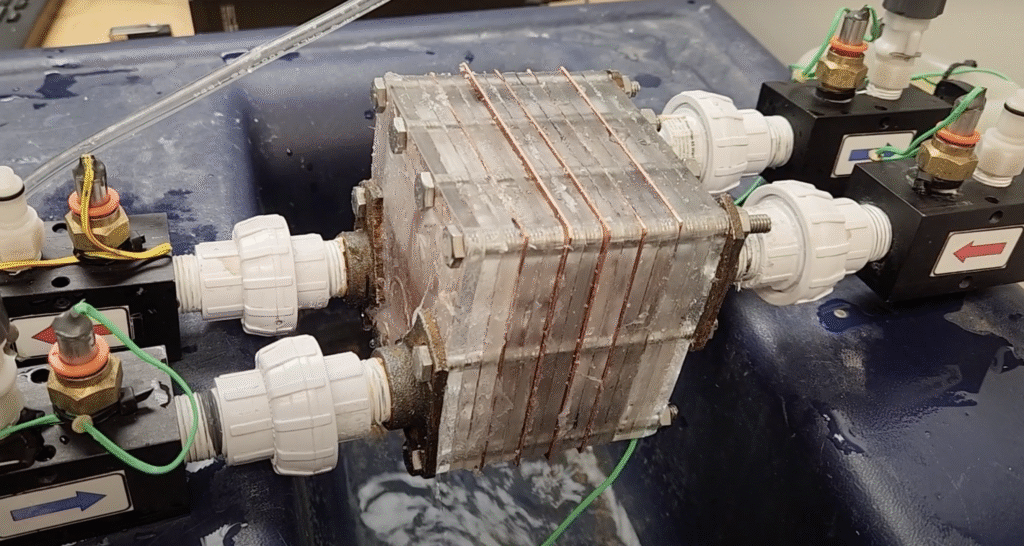
Engineered a volume efficient parallel-plate heat exchanger for ~$100. The heat exchanger ran in counter flow for optimal heat transfer. A MATLAB model was produced to verify the heat exchanger performance and help assess the presence of leaks/mixing. The heat exchanger transferred 1kW, which correlated to 1081kW/m3 and 8.5W/$. The heat exchanger housing was made of acrylic for ease of manufacturing (laser cutter) and to maintain low costs. The reservoirs were separated by copper plates since copper is a good thermal conductor, and the plate design maximizes conductive surface area. Ultimately, the heat exchanger was recognized as the most volume efficient heat exchanger among all groups in the course.
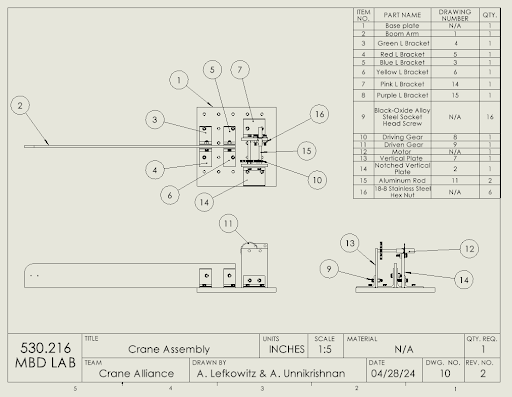
Designed and manufactured a crane boom and transmission system to lift 10 pounds within 2 minutes while deflecting less than 0.5 inches. Conducted material selection analysis to optimize material properties for functionality while staying under budget. Performed theoretical calculations considering various design factors to ensure proper structural stability and mechanical advantage. Created a manufacturing plan and adjusted part design using design for manufacturing principles. Manufactured parts from stock acrylic (laser cut and mill) and carbon steel (mill and bandsaw). The crane successfully lifted the weight in 23 seconds (19% of the allotted time) and deflected only 3/16”, which was less than the maximum deflection.
Crane video
Stirling Engine
Provided with engineering drawings, created a CAD model with moving components, as well as manufactured and assembled a Stirling engine. Gained experienced machining using a lathe, mill, and bandsaw to create the profile and details on many of the components. I also used sheet metal tooling for the support legs and for the displacer/piston linkages. I used sand casting to create the flywheel.
Engine video
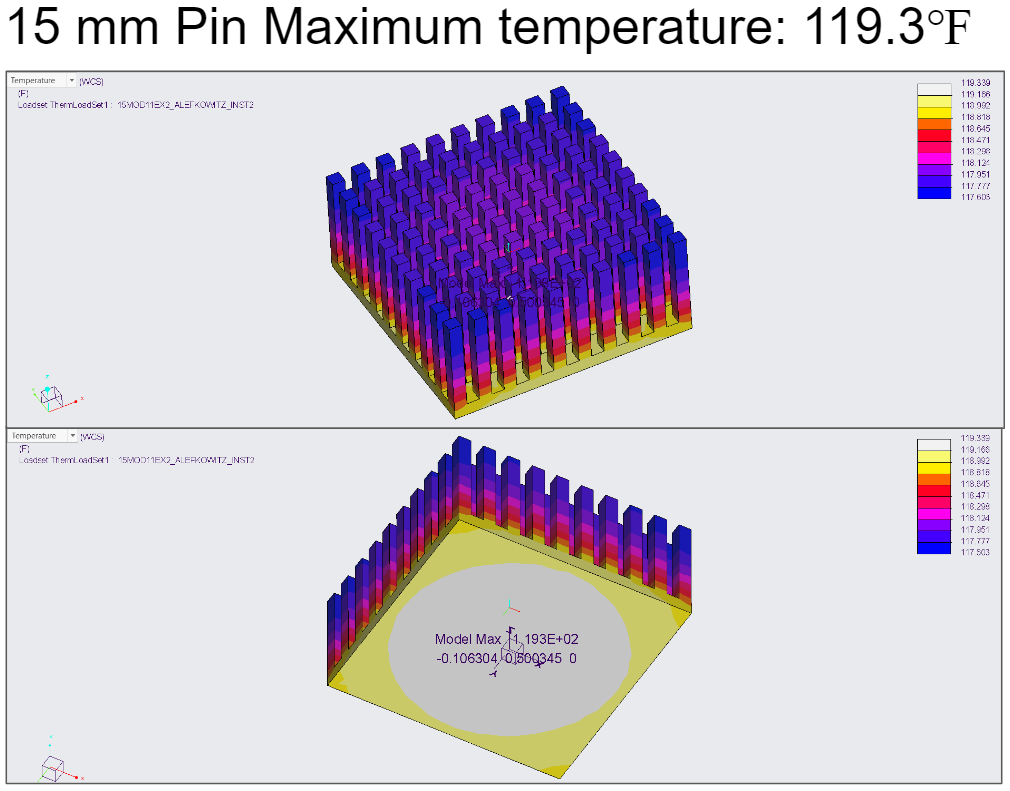
Heat Sink Thermal Analysis
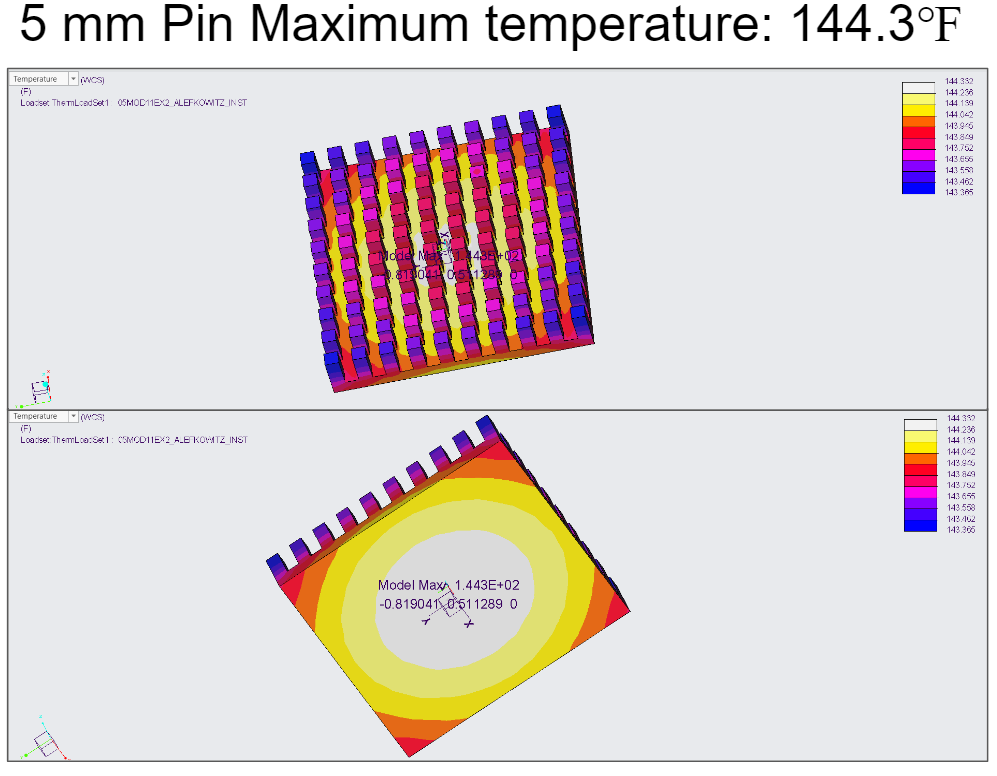
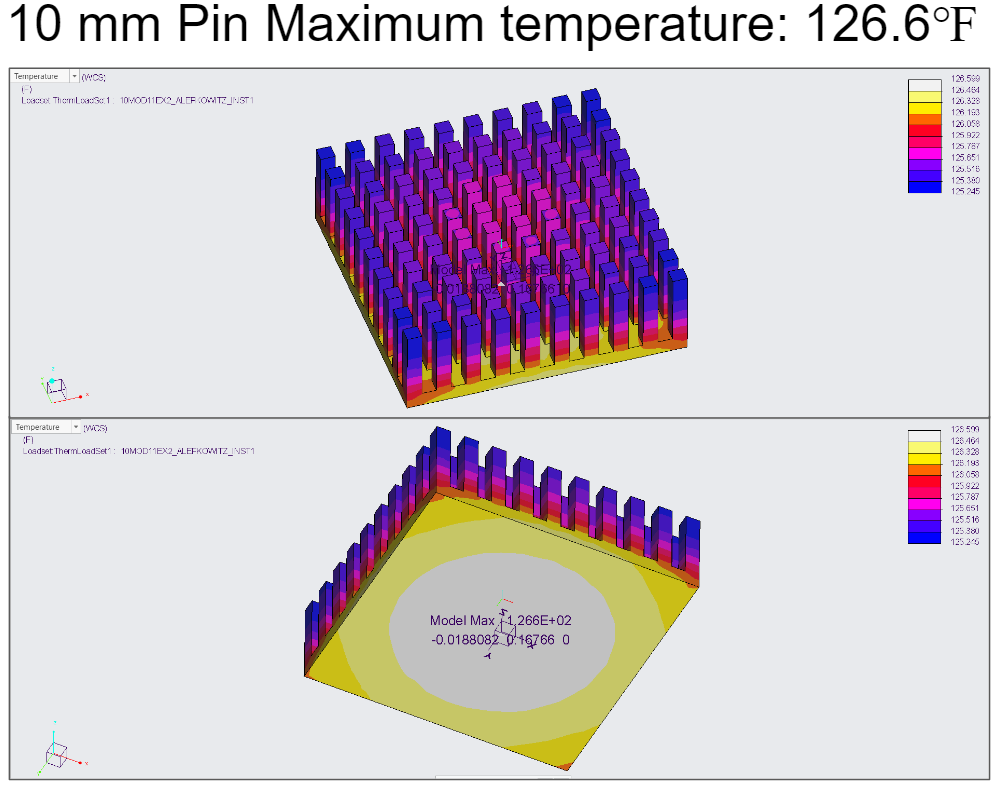
Conducted thermal analysis using Creo Simulate of an Aluminum 6061 heat sink to study the impact of changing the pin length on the maximum temperature. This revealed that increasing the length of the pin, while keeping everything else constant, significantly reduces the maximum temperature of the body. I created a family table with pin lengths of 5, 10, and 15 millimeters and ran a single-pass adaptive convergence study.